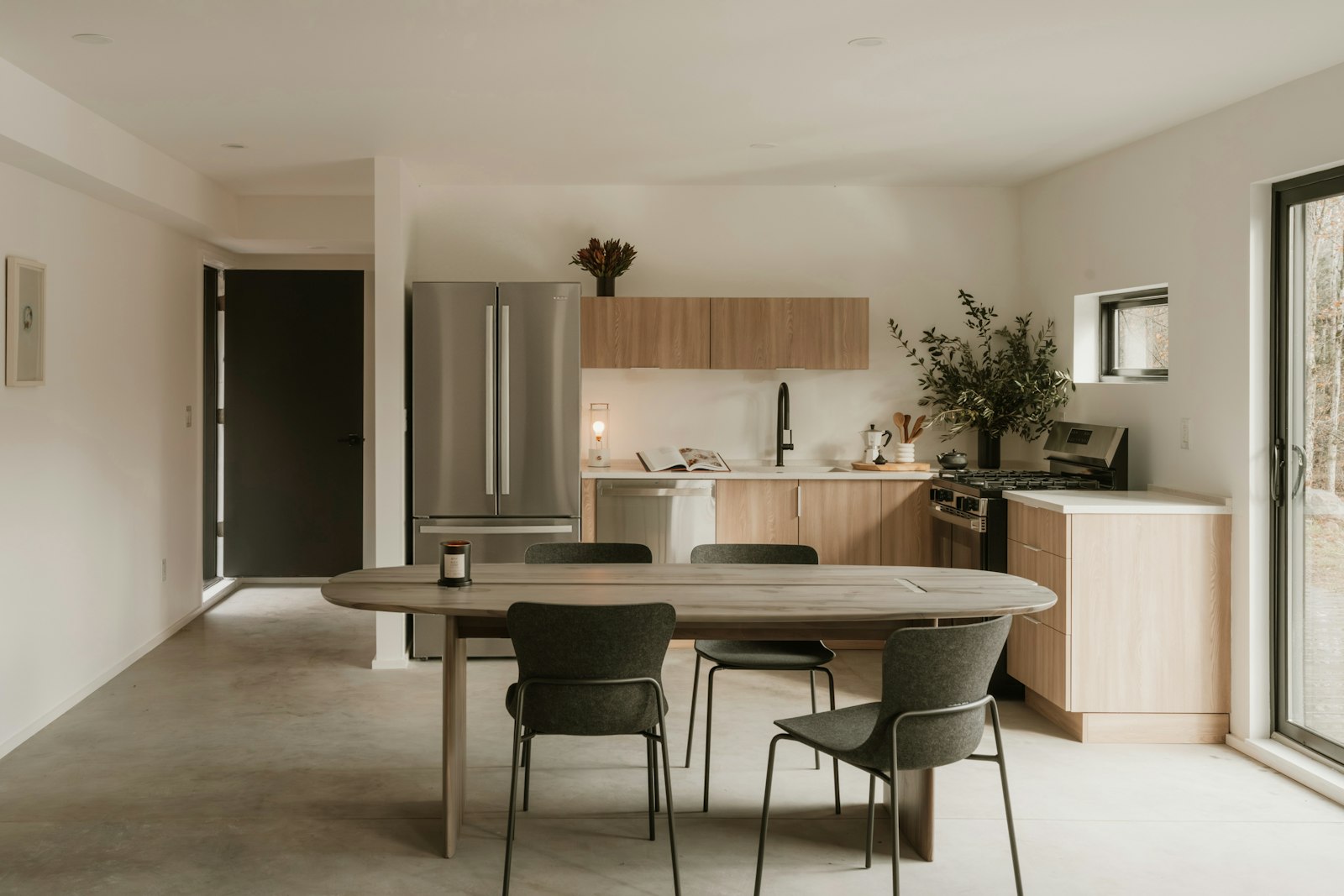
Honest buyer note: Our furniture is made from solid Indonesian teak in vetted workshops in Jepara and Bali, so expect natural grain, colour variation and a small dimensional tolerance between pieces. Grade A kiln-dried teak runs about 8–12% moisture content for export markets; teak grades (A, B, reclaimed) are banded descriptions, not guarantees of identical appearance. All prices, MOQs, lead times, CBM and container counts are indicative ranges (FOB Indonesia) and final pricing is by quote. We work only with legal, documented timber — Indonesia’s SVLK system, with V-Legal / FLEGT documents; FSC-certified teak is available on request at a premium. We do not claim certifications we do not hold. We act as an independent sourcing desk and handle export packing and documentation.
Indoor teak furniture wholesale from Indonesia covers dining tables, sideboards, beds, cabinets, consoles, and case goods built from kiln-dried teak (Tectona grandis) for climate-controlled interiors in the USA, Europe, and Australia. Bali Teak Furniture is an independent sourcing desk: we match your indoor program to vetted workshops in Jepara and Bali, verify grade and kiln-drying, control joinery quality, and ship FCL-direct with full export documents under HS code 9403. This page explains what defines export-quality indoor teak and how to buy it by the container.
What makes teak the right wood for indoor case goods
Teak’s natural oils and tight grain give it dimensional stability, which matters more indoors than most buyers expect. A dining table or cabinet moving into a heated home in Hamburg, Denver, or Melbourne sits at far lower humidity than a Javanese workshop. If the wood was not dried correctly, panels cup, drawers stick, and mitre joints open. Properly kiln-dried teak at 8–12% moisture content reaches that destination far more stable than air-dried stock, which is why we treat the kiln-dry check as non-negotiable on indoor lines.
Kiln-drying and moisture content for interiors
Indoor teak should land in the 8–12% moisture range, and for very dry heated markets the lower end of that band is safer. We pin-meter random boards and finished components during inspection rather than trusting a verbal “it’s dry.” Under-dried teak is the single most common cause of post-shipment complaints on indoor furniture: surface checking, tabletop movement, and split panels usually trace back to wet stock loaded under freight pressure. Correct drying is slower and costs more, and we price that honestly instead of quoting air-dried stock as kiln-dried.
Joinery that survives shipping and dry homes
Construction separates real export furniture from souvenir-grade work. We look for mortise-and-tenon joints at table and chair frames, doweled or blocked corners on case goods, dovetailed or robust box-jointed drawers, and floating panels that allow seasonal movement instead of glued-rigid tops that crack. Hardware should be solid — brass or stainless — not light plated steel that rusts in transit. We reject glue-and-staple shortcuts on structural joints because they fail in a dry destination climate within a season or two.
Indoor categories we source
Common indoor programs include dining tables and extension tables, dining chairs and benches, sideboards and buffets, TV consoles and media units, bookcases and shelving, bed frames and headboards, nightstands, dressers, and home-office desks. Grade A heartwood is used where the surface is prominent and where strength matters; Grade B serves mid-tier lines; Grade C with more character and sapwood suits budget or rustic ranges. We tell you which grade a quote is built on so you can hold a consistent retail price point.
Finishes for indoor teak
Indoor teak takes several finishes. A natural oiled finish keeps the warm honey tone and is easy to refresh. A matte lacquer or hardwax-oil gives a sealed, low-sheen surface that resists rings and spills for hospitality and retail. A light wash or whitewash suits coastal and Scandinavian-leaning ranges. We confirm the finish on a signed sample before production so the container matches what you approved, because finish drift between sample and bulk is a frequent and avoidable dispute.
Jepara and Bali: where indoor teak is built
Indonesia’s indoor case-goods capacity concentrates in two regions, and they have different strengths. Jepara, on Java’s north coast, is a centuries-old furniture and carving cluster with hundreds of workshops, deep joinery skill, and the volume to repeat large dining and bedroom programs. Bali leans toward design-led studios, smaller batches, and distinctive finishing, which suits boutique ranges and statement pieces. As a desk we draw on both: a high-volume dining program may sit in Jepara while a designer console range sits in Bali, and we can consolidate them into one shipment. Matching the model to the region’s real strength is part of how we hold quality and price.
Common defects we screen out
On indoor lines we inspect against a specific defect list rather than a general “looks fine.” The recurring problems are under-dried stock that moves after delivery, sapwood substituted into a “Grade A” quote, glue-and-staple joints standing in for real joinery, drawer boxes that rack because they were nailed rather than jointed, tops that are not flat across their width, finish that differs from the signed sample, and plated hardware that corrodes. Each of these is cheap to catch in the workshop and expensive to handle as a destination complaint, which is why our inspection is component-level and tied to the payment milestones rather than a quick final glance.
Buying indoor teak by the container
Indoor furniture is bulky relative to weight, so orders are container-anchored. A 20ft holds roughly 25–28 CBM and a 40ft high-cube around 58–68 CBM, with knock-down (KD) packing of tables and beds fitting far more per container than fully assembled goods. We can consolidate a mixed container — for example dining from one workshop and bedroom from another — under one packing list and one set of documents. Indicative FOB Semarang ranges are given per item or per CBM and firmed once specs and quantity are set. Typical lead time from confirmed order and signed sample to a loaded container runs 45–90 days depending on volume and finish complexity.
Acclimatisation advice for your customers
We pass on simple guidance that reduces warranty claims at retail. Even correctly kiln-dried teak benefits from a short acclimatisation period in its final room before heavy use, particularly for large tabletops moving from a humid shipping environment into a dry heated home; a week or two lets the wood settle to local conditions. Customers should keep solid-wood pieces away from direct radiator or vent airflow and out of strong direct sun, and use a coaster or runner under very hot or wet items. None of this is unique to our furniture — it is normal solid-hardwood care — but stating it in your product literature pre-empts the “the table moved” complaint that otherwise lands on the retailer.
Frequently asked questions
What moisture content should indoor teak have? 8–12%, and toward the lower end for very dry heated markets, to limit movement and checking after delivery.
Can you supply flat-pack indoor furniture? Yes — knock-down packing for tables, beds, and shelving increases container fill and reduces transit breakage; we confirm assembly hardware and instructions.
Do you do private-label indoor ranges? Yes, through our custom/OEM service — your designs, dimensions, finishes, and branding to spec.
What is the minimum order? Container-anchored (FCL); mixed containers across workshops are possible to fill an order.
Request an indoor teak quote: send your catalogue, drawings, or target list to [email protected] or WhatsApp +62 811-3941-4563 for an indicative FOB Semarang range and a vetted-workshop shortlist.